
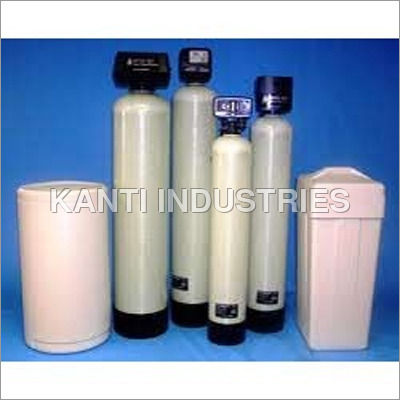
Water Softener For Boilers
20000 INR/Unit
Product Details:
- Usage Industrial/Commercial
- Accessories Brine Tank, Hardness Test Kit
- Technology Ion Exchange Based
- Type Water Softener For Boilers
- Material FRP (Fiber Reinforced Plastic)
- Storage Capacity Depends on Model
- Power Not required (Manual Operation)
- Click to View more
X
Water Softener For Boilers Price And Quantity
- 20000 INR/Unit
- 1 Unit
- 1" to 3" BSP/NPT (varies by model)
- 1 Unit
- Strong Acid Cation Resin
- Upto 1000 ppm (as CaCO3)
- Gravel Bed
- Hot and Cold Water Applications
- Below 5 ppm
- Blue/White (customizable)
Water Softener For Boilers Product Specifications
- Borewell, Municipal Supply, Tank Water
- FRP (Fiber Reinforced Plastic)
- 2000 LPH to 100,000 LPH
- Depends on Model
- Multiport Valve
- Water Softener For Boilers
- Not required (Manual Operation)
- Floor Mounted
- Ion Exchange Based
- Boiler Feed Water Treatment
- Standard (customizable as per requirement)
- Vertical
- Industrial/Commercial
- Brine Tank, Hardness Test Kit
- Upto 50C
- 1" to 3" BSP/NPT (varies by model)
- 1 Unit
- Strong Acid Cation Resin
- Upto 1000 ppm (as CaCO3)
- Gravel Bed
- Hot and Cold Water Applications
- Below 5 ppm
- Blue/White (customizable)
Water Softener For Boilers Trade Information
- 1000 Unit Per Day
- 1 Week
Product Description
Water Softener For Boilers is a unit that is utilized to mellow water by evacuating the minerals that reason the water to be hard. At the point when water contains an abnormal state of calcium and magnesium it is called hard water. Hard water can be treated with this product to diminish the negative effects of hard water. Water conditioners are particular particle trades that are intended to evacuate particles which are emphatically charged.
The product enables cleaner and shinier flatware, dish sets, mirrors, tiles, autos, or any pipes installations. Also, it enables a gentler & spotless skin with smooth hair. The soft water made by Water Softener also preserves the life of all water using applications. It boosts the serviceability of all water apparatuses, such as ice producers, dishwashers, water warmers espresso machines, and clothing gear.
Product details
| Brand | KI |
| Softener Tank Type | Vertical |
| Cleaning System | Automatic |
| Type | Water softener |
| Size | Standard |
| Condition | New |
Efficient Hardness Removal
Our water softener uses ion exchange technology and strong acid cation resin to reduce water hardness to below 5 ppm, protecting boilers from scaling and corrosion. The unit is engineered to treat feed water from borewell, municipal, or tank sources, ensuring consistent water quality for both hot and cold applications.
Customizable for Every Need
Available in blue or white and with standard or customized dimensions, this system accommodates various site requirements. Connection sizes range from 1" to 3" BSP/NPT, making it compatible with diverse plumbing setups. Capacities from 2,000 to 100,000 LPH meet both industrial and commercial demands.
User-Friendly Manual Operation
This floor-mounted water softener requires no power supply. It features a multiport valve for easy manual control. Accessories like a brine tank and hardness test kit are included for effective operation and maintenance. Installation and usage are simpleideal for busy facilities.
FAQs of Water Softener For Boilers:
Q: How does the water softener protect boilers from scale formation?
A: The water softener uses strong acid cation resin to exchange hardness-causing ions (like calcium and magnesium) with sodium, reducing outlet hardness to below 5 ppm. This minimizes scale formation, preventing damage and maintaining boiler efficiency.Q: What is the maximum inlet water hardness this system can handle?
A: This water softener is designed to treat feed water with hardness levels up to 1000 ppm (as CaCO3), making it suitable for a wide range of applications including high-hardness sources.Q: When should the resin or media in the water softener be replaced or regenerated?
A: Regeneration frequency depends on water hardness and usage volume. Regular hardness testing using the supplied kit can indicate when resin regeneration or replacement is necessary, typically after several cycles or when outlet hardness increases.Q: Where can this water softener be installed and what is the preferred setup location?
A: The unit is floor-mounted and ideal for installation near boiler systems in industrial or commercial facilities. It can be connected to borewell, municipal, or tank water sources before the water enters the boiler feed line.Q: What is the process by which this water softener treats boiler feed water?
A: Feed water passes through the vessel containing strong acid cation resin. The resin exchanges hardness ions for sodium, with the gravel bed supporting distribution. Periodic regeneration with brine restores resin functionality.Q: Is the water softener suitable for both hot and cold water applications?
A: Yes, the system is engineered for use with both hot and cold water, handling temperatures up to 50C, ensuring reliable operation under diverse feedwater conditions.Q: What are the benefits of choosing a manual, power-free water softener for boiler applications?
A: A manual operation ensures lower maintenance costs, no dependency on electricity, and simple control via the multiport valve, offering reliable water softening in environments with intermittent power supply.Tell us about your requirement

Price:
Quantity
Select Unit
- 50
- 100
- 200
- 250
- 500
- 1000+
Additional detail
Mobile number
Email


Contact Details

- A-60, Sec 37 (RHO 2)Greater Noida - 201310, Uttar Pradesh, India
- Phone : 08045813182
GST : 09ALDPK2084J1ZY

- Mr Rajiv Kaushik (Proprietor)
- Mobile : 08045813182
- Send Inquiry
 Send Inquiry
|


 Send Inquiry
 Send SMS
 Call Me Free
KANTI INDUSTRIES
All Rights Reserved.(Terms of Use)
Developed and Managed by Infocom Network Private Limited.
Developed and Managed by Infocom Network Private Limited.


